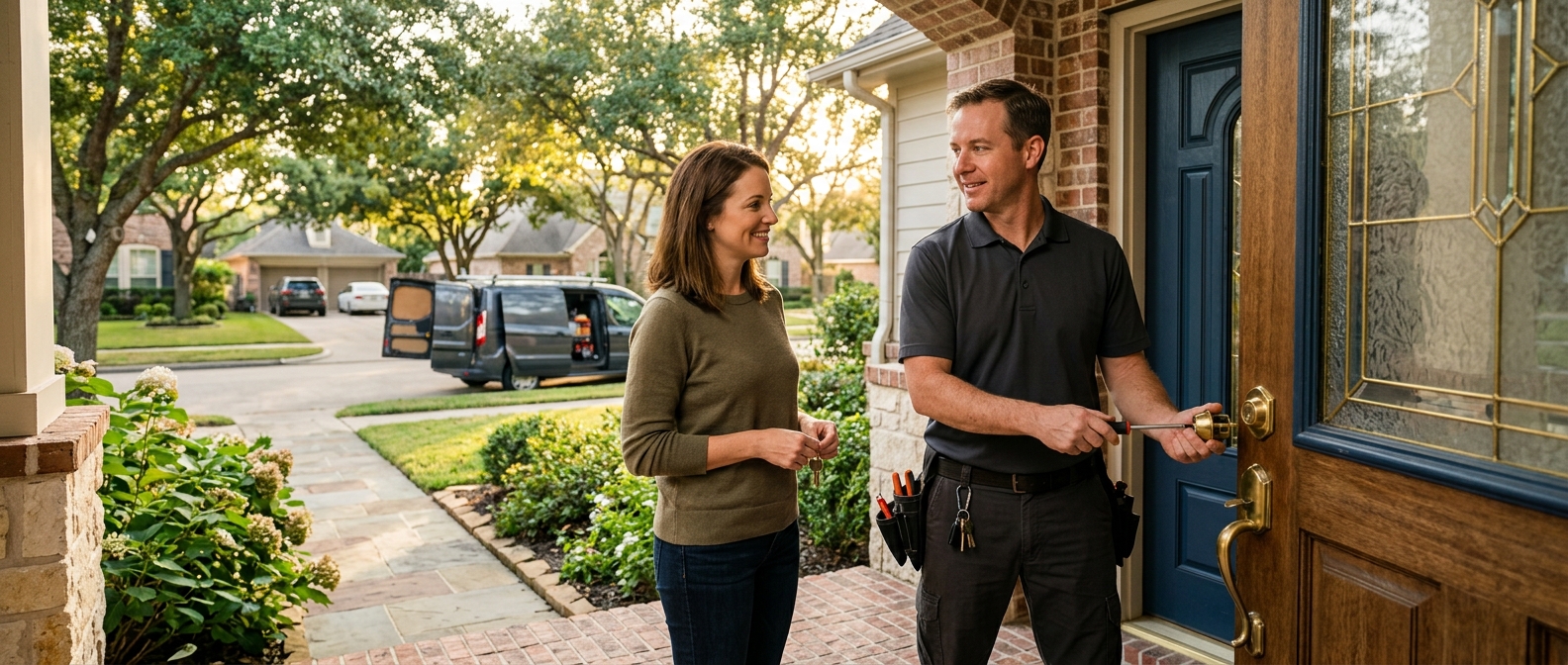
Short answer: Gulf Coast humidity, brutal summer heat, and storm-season flooding are quietly tough on the locks most Houston homeowners never think about until one seizes up. A little seasonal upkeep keeps deadbolts turning smoothly and stretches the life of hardware you'd otherwise pay to replace. Here's a realistic, Houston-specific routine you can actually stick to.
Gulf Coast humidity, brutal summer heat, and storm-season flooding are quietly tough on the locks most Houston homeowners never think about until one seizes up. A little seasonal upkeep keeps deadbolts turning smoothly and stretches the life of hardware you'd otherwise pay to replace. Here's a realistic, Houston-specific routine you can actually stick to.
Locks are fine mechanisms of small springs, pins, and metal-on-metal contact, and Houston's air works against every part of that. Persistent humidity lets moisture condense inside a cylinder, where it slowly corrodes pins and springs and leaves a gritty film that makes a key feel like it's dragging. Homes closer to Galveston Bay and Clear Lake get an extra dose of salt in the air, which accelerates tarnish and pitting on brass and nickel hardware. Add wood doors that swell in the wet months and shrink when the AC runs hard, and you get deadbolts that align perfectly in March and bind in August. None of this is a sign of a bad lock; it's just what our environment does to good hardware left unmaintained.
You don't need a schedule you'll ignore. Tie lock care to three moments you'll remember: before summer, at the start of hurricane season, and once the weather finally cools. Each visit takes about ten minutes per door. Wipe exterior hardware clean of grime and salt film, then lubricate the cylinder with a dry PTFE or graphite-based product made for locks. Avoid the temptation to reach for WD-40 or spray oil; those attract dust and gum up over time, leaving you worse off in a season or two. While you're there, work the key in and out a few times to spread the lubricant, tighten any loose screws on the lockset and hinges, and check that the deadbolt throws fully without you lifting or leaning on the door. Loose hardware and a door that has drifted out of alignment cause far more 'broken lock' calls than actual lock failure.
Before hurricane season peaks, give your exterior doors a weather check. Inspect the weatherstripping and door sweep so wind-driven rain isn't being forced against the cylinder, and confirm your garage's manual release cord is accessible in case the power goes out. Keep at least one spare key stored somewhere off-site, such as with a trusted neighbor or family member, so a lockout during a storm doesn't turn into an emergency. If a lock is ever submerged in floodwater, treat it as compromised: rinse it with clean water to flush out silt, dry it thoroughly, and re-lubricate, but understand that floodwater corrosion often works from the inside out. A lock that feels rough or gritty for weeks after a flood is usually cheaper to replace than to keep nursing along.
Locks are fine mechanisms of small springs, pins, and metal-on-metal contact, and Houston's air works against every part of that. Persistent humidity lets moisture condense inside a cylinder, where it slowly corrodes pins and springs and leaves a gritty film that makes a key feel like it's dragging. Homes closer to Galveston Bay and Clear Lake get an extra dose of salt in the air, which accelerates tarnish and pitting on brass and nickel hardware. Add wood doors that swell in the wet months and shrink when the AC runs hard, and you get deadbolts that align perfectly in March and bind in August. None of this is a sign of a bad lock; it's just what our environment does to good hardware left unmaintained.
You don't need a schedule you'll ignore. Tie lock care to three moments you'll remember: before summer, at the start of hurricane season, and once the weather finally cools. Each visit takes about ten minutes per door. Wipe exterior hardware clean of grime and salt film, then lubricate the cylinder with a dry PTFE or graphite-based product made for locks. Avoid the temptation to reach for WD-40 or spray oil; those attract dust and gum up over time, leaving you worse off in a season or two. While you're there, work the key in and out a few times to spread the lubricant, tighten any loose screws on the lockset and hinges, and check that the deadbolt throws fully without you lifting or leaning on the door. Loose hardware and a door that has drifted out of alignment cause far more 'broken lock' calls than actual lock failure.
Before hurricane season peaks, give your exterior doors a weather check. Inspect the weatherstripping and door sweep so wind-driven rain isn't being forced against the cylinder, and confirm your garage's manual release cord is accessible in case the power goes out. Keep at least one spare key stored somewhere off-site, such as with a trusted neighbor or family member, so a lockout during a storm doesn't turn into an emergency. If a lock is ever submerged in floodwater, treat it as compromised: rinse it with clean water to flush out silt, dry it thoroughly, and re-lubricate, but understand that floodwater corrosion often works from the inside out. A lock that feels rough or gritty for weeks after a flood is usually cheaper to replace than to keep nursing along.
Call (281) 982-4550 and describe the situation, your exact location, and what you need. Timing is confirmed on that call rather than promised in advance.
Call for help: (281) 982-4550 — a straight answer and an honest estimate before any work begins.