Short answer: When you want your old keys to stop working, you have two paths, and they cost very different amounts. Rekeying and replacing solve overlapping problems, so people often pay for the more expensive option when the cheaper one would have done the job. Here's how to tell them apart and choose the one that fits your situation and budget.
When you want your old keys to stop working, you have two paths, and they cost very different amounts. Rekeying and replacing solve overlapping problems, so people often pay for the more expensive option when the cheaper one would have done the job. Here's how to tell them apart and choose the one that fits your situation and budget.
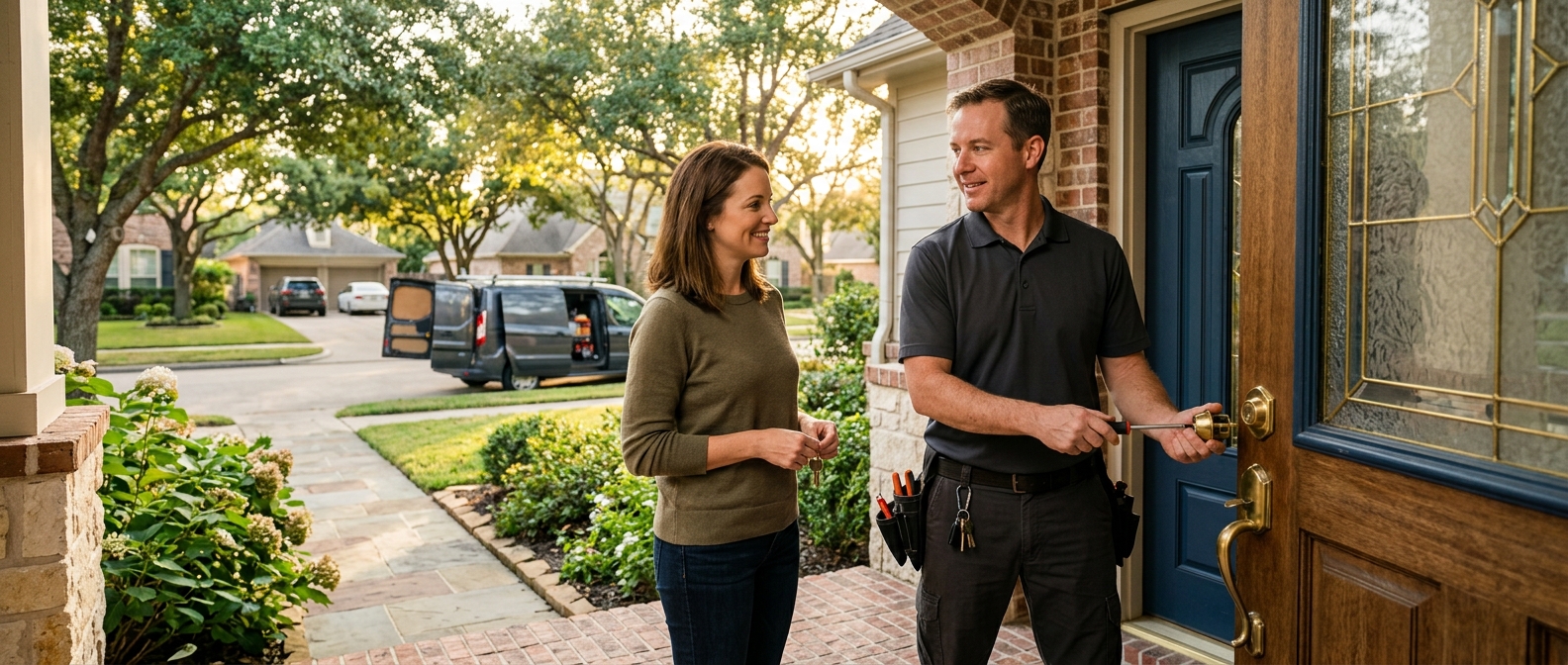
Rekeying keeps your existing lock hardware but changes the pins inside the cylinder so that your old keys no longer work and a new key does. Because the lock stays on the door and only the internals are re-pinned, it's typically the more affordable choice, often a modest per-cylinder charge on top of the service call. It shines in the exact moments most people need it: you just bought a home and have no idea how many old keys are floating around, you lost a key and don't want it working if someone finds it, or a roommate, tenant, or contractor moved on and you want to close that door literally and figuratively. If the hardware itself is in good shape, rekeying gives you fresh security for a fraction of the cost of new locks.
Sometimes new hardware is the better value even though it costs more upfront. If a lock is worn, corroded, or gritty, which Houston's humidity and salt air cause faster than in drier climates, re-pinning a failing cylinder just delays the inevitable. Replacement also makes sense when you want to upgrade: moving up to a higher security grade, matching finishes after a remodel, or adding a keypad or smart lock for keyless entry. And after a break-in or attempted forced entry, replacing damaged hardware is usually wiser than trusting a lock that's already been compromised. Expect to pay for the hardware on top of labor, but understand you're buying condition and capability you wouldn't get from a rekey.
Here's the shortcut: if your hardware is sound and you simply need the old keys to stop working, rekey. If the hardware is failing, mismatched, or you want an upgrade, replace. There's also a trick that saves real money and hassle in either direction called keying alike, where a locksmith sets multiple locks to open with a single key. If you're already having several doors rekeyed or replaced, having them keyed alike means one key for the front, back, and garage entry doors instead of a crowded ring. It costs little extra at the time of service and pays you back in convenience every single day, so it's worth asking about whichever path you choose.
Rekeying keeps your existing lock hardware but changes the pins inside the cylinder so that your old keys no longer work and a new key does. Because the lock stays on the door and only the internals are re-pinned, it's typically the more affordable choice, often a modest per-cylinder charge on top of the service call. It shines in the exact moments most people need it: you just bought a home and have no idea how many old keys are floating around, you lost a key and don't want it working if someone finds it, or a roommate, tenant, or contractor moved on and you want to close that door literally and figuratively. If the hardware itself is in good shape, rekeying gives you fresh security for a fraction of the cost of new locks.
Sometimes new hardware is the better value even though it costs more upfront. If a lock is worn, corroded, or gritty, which Houston's humidity and salt air cause faster than in drier climates, re-pinning a failing cylinder just delays the inevitable. Replacement also makes sense when you want to upgrade: moving up to a higher security grade, matching finishes after a remodel, or adding a keypad or smart lock for keyless entry. And after a break-in or attempted forced entry, replacing damaged hardware is usually wiser than trusting a lock that's already been compromised. Expect to pay for the hardware on top of labor, but understand you're buying condition and capability you wouldn't get from a rekey.
Here's the shortcut: if your hardware is sound and you simply need the old keys to stop working, rekey. If the hardware is failing, mismatched, or you want an upgrade, replace. There's also a trick that saves real money and hassle in either direction called keying alike, where a locksmith sets multiple locks to open with a single key. If you're already having several doors rekeyed or replaced, having them keyed alike means one key for the front, back, and garage entry doors instead of a crowded ring. It costs little extra at the time of service and pays you back in convenience every single day, so it's worth asking about whichever path you choose.
Call (281) 982-4550 and describe the situation, your exact location, and what you need. Timing is confirmed on that call rather than promised in advance.
Call for help: (281) 982-4550 — a straight answer and an honest estimate before any work begins.